
Polymer Clay Jewelry Alternatives for Sensitive Ears
Table of Contents
- Why Polymer Clay Earrings Appeal to Sensitive Ears
- Nickel-Free Earrings: The Foundation of Comfort
- Titanium Earrings for Sensitive Ears: Why Material Matters
- Surgical Steel Stud Earrings: Durability and Hypoallergenic Design
- Understanding Polymer Clay Earring Posts and Hardware
- Comparing Earring Styles: Studs, Dangles, and Drops for Comfort
- Care and Durability: Keeping Your Earrings Safe for Sensitive Skin
- Frequently Asked Questions
Last Updated: October 11, 2026
Why Polymer Clay Earrings Appeal to Sensitive Ears
Many people experience itching, redness, or discomfort from earrings due to metal sensitivities. Polymer clay jewelry alternatives for sensitive ears offer a lightweight, hypoallergenic option without sacrificing style or durability.

Gioielli Bijit creates handcrafted polymer clay jewelry designed for everyday wear without allergic reactions. The material is non-toxic and naturally resistant to metals that commonly trigger sensitivity.
Polymer clay contains no nickel, a primary allergen in earrings. Paired with quality hypoallergenic posts, it provides a reliable foundation for comfortable, all-day wear.
Nickel-Free Earrings: The Foundation of Comfort
Nickel-free earrings start with a simple principle: remove the metal most likely to cause problems. Nickel is common in earring posts and findings. Even small amounts trigger reactions in sensitive individuals, causing inflammation or persistent itching.
"Nickel-free" means zero nickel content, but the claim is unregulated. Manufacturers can label products this way without verification, making it essential to verify actual post materials.
Comparing Post Materials: Polymer Clay vs. Metal Alternatives
Polymer clay earrings can use either polymer clay posts or metal posts paired with polymer clay components. The choice affects comfort, durability, and long-term wearability. Here's how the most common options compare:

Polymer Clay Posts Polymer clay posts contain no nickel and are naturally hypoallergenic. The advantage is zero metal contact.
Titanium Posts Implant-grade titanium (ASTM F136 or F67) is the gold standard for sensitive ears. It's biocompatible, doesn't corrode, and rarely triggers reactions.
Niobium Posts Niobium matches titanium's hypoallergenic properties at lower cost. It's lightweight, doesn't corrode, and is safe for sensitive ears. Pricing falls between surgical steel and titanium, though availability is limited.
Surgical Steel Posts (Stainless Steel) High-quality surgical steel (316L or 316LVM) contains less than 0.05% nickel and is durable and affordable.
Gold-Plated Posts (Nickel-Free Base) Gold plating over a nickel-free base can be hypoallergenic, but plating wears after 6-12 months of daily wear, exposing the base metal.
Understanding Material Grades and Labeling
"Hypoallergenic" is unregulated. Instead, look for specific material names and grades:
- Titanium: Verify "implant-grade," "ASTM F136," or "surgical titanium." Avoid unmarked "titanium" or "titanium-plated" posts, which may contain lower-grade alloys.
- Niobium: Should be labeled "pure niobium" or "hypoallergenic niobium." Niobium doesn't require grading standards like titanium, but reputable makers specify purity.
- Surgical Steel: Look for "316L stainless steel" or "surgical stainless steel." Avoid generic "stainless steel," which may contain higher nickel percentages.
- Gold: Solid gold should state karat weight (14K, 18K). Gold-plated items should specify the base metal (e.g., "14K gold-plated titanium").
Ask manufacturers directly about post composition. If a maker cannot specify the exact metal content, look elsewhere.
Nickel Allergy vs. General Irritation
Not all earring-related discomfort is caused by nickel allergy. Understanding the difference helps you choose the right material and avoid unnecessary restrictions.
True Nickel Allergy is an immune response causing itching, redness, and sometimes blistering within hours to days of contact. Once sensitized, even trace amounts trigger reactions.
General Earlobe Irritation can stem from pressure from heavy earrings, friction from loose posts, bacterial buildup, or sensitivity to plating materials.
Sensitivity to Surgical Steel affects people with severe nickel sensitivities. If you've reacted to multiple surgical steel earrings over time, your sensitivity is likely genuine, and titanium or niobium is the safer choice.
Titanium Earrings for Sensitive Ears: Why Material Matters
Titanium is one of the most hypoallergenic metals for earring posts. Medical professionals recommend it for initial piercings because it's biocompatible, lightweight, doesn't corrode, and rarely triggers reactions.
Titanium doesn't leach ions that irritate skin, making titanium earrings for sensitive ears a clinically sound choice. Though more expensive than surgical steel, the investment pays dividends through consistent comfort.
When evaluating titanium options, verify that the posts are implant-grade titanium (also called surgical titanium). This designation ensures the material meets strict purity standards. Lower-grade titanium may contain trace elements that trigger reactions in highly sensitive individuals.
Surgical Steel Stud Earrings: Durability and Hypoallergenic Design
Surgical steel refers to stainless steel alloys formulated for medical applications with minimal nickel. High-quality surgical steel contains less than 0.05% nickel, making it far safer than standard stainless steel.
Surgical steel posts resist corrosion and withstand repeated wear without degrading. For people with sensitive ears seeking reliable, affordable options, surgical steel provides comfort without titanium's premium pricing.
Understanding Polymer Clay Earring Posts and Hardware
What Makes Quality Hardware Hypoallergenic
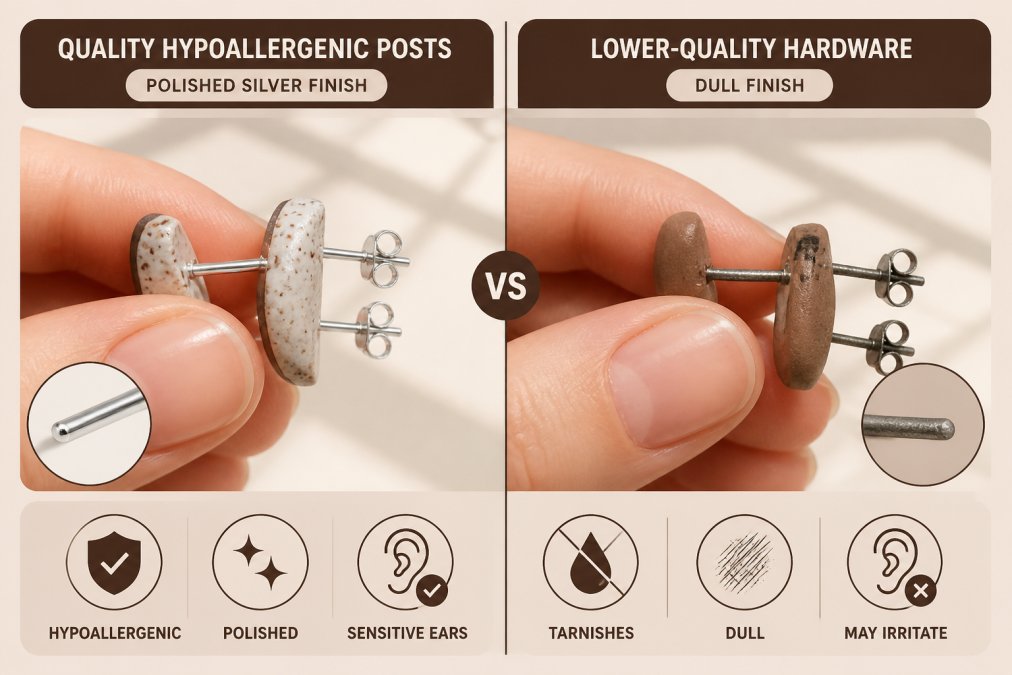
Quality hardware transforms polymer clay earrings into comfortable accessories. Posts, findings, and closures matter as much as the clay itself. Hypoallergenic hardware uses surgical steel, titanium, or gold-plated materials with nickel-free bases.

Look for specific material declarations. Reputable makers list post materials explicitly.
Secure backings prevent earrings from shifting, reducing irritation from constant movement. Push-back closures, lever-backs, and post-and-butterfly systems offer different security levels.
Identifying Safe Post Materials
"Hypoallergenic" is unregulated. Look for specific material names: surgical steel, titanium, niobium, or gold-plated nickel-free bases.
Niobium is an underrated option for sensitive ears, hypoallergenic, lightweight, and affordable. Some artisan makers creating polymer clay jewelry alternatives for sensitive ears use niobium because it combines safety with cost-effectiveness.
Purple Swirl Dangle Earrings →
Comparing Earring Styles: Studs, Dangles, and Drops for Comfort
Stud earrings sit flush against the ear, minimizing movement and pressure, making them ideal for sensitive ears and new piercings.
Dangle and drop earrings move with your head, creating repetitive micro-movements that may trigger irritation. Lightweight polymer clay dangles reduce this risk compared to metal alternatives.
Heavier earrings put sustained pressure on the piercing, stretching tissue over time. Polymer clay's lightness makes it suited to dangle styles, posing minimal stress on sensitive tissue.
| Earring Style | Weight Profile | Best For | Comfort Consideration |
|---|---|---|---|
| Stud | Minimal | Sensitive ears, new piercings | Least movement, lowest pressure |
| Dangle | Light to medium | Everyday wear with active lifestyle | Requires lightweight material |
| Drop | Medium | Special occasions, established piercings | More pressure on earlobe |
| Hoop | Varies | Depends on diameter and material | Continuous pressure on piercing |
Care and Durability: Keeping Your Earrings Safe for Sensitive Skin
Proper care extends earring life and prevents material degradation that triggers irritation. Different materials require different maintenance.
Cleaning by Material Type
Polymer Clay Components Polymer clay earrings require gentle handling. Avoid excessive heat, direct sunlight, and harsh chemicals.
Avoid alcohol-based cleaners and acetone on resin-finished pieces, as they cloud or strip the coating that protects the design and clay.
Titanium and Niobium Posts Titanium and niobium don't tarnish or corrode. Wipe with a soft cloth to remove daily buildup.
Surgical Steel Posts Surgical steel resists corrosion but can develop surface oxidation or water spots. Clean with a soft cloth and mild soap.
Gold-Plated Posts Gold plating requires care. Avoid prolonged water exposure and dry immediately after cleaning. Over 6-12 months of daily wear, plating thins.
Water Exposure and Piercing Health
Chlorinated water and saltwater accelerate corrosion of lower-grade metals and may irritate healing piercings. If you swim regularly, remove earrings or choose titanium/niobium posts.
For new piercings or sensitive ears, minimize water contact during the first 2-3 months. Moisture trapped in the piercing channel promotes bacterial growth.
After swimming or showering, gently pat ears dry. Moisture promotes bacterial growth, especially with dangle or drop earrings.
Durability Expectations by Material
Polymer Clay Posts (if used) Polymer clay posts compress with repeated insertion and removal. Expect 1-2 years of daily wear before replacement. If posts loosen, have them replaced rather than attempting repairs.
Titanium and Niobium Posts Titanium and niobium posts maintain integrity through years of daily wear. Expect 5+ years of reliable performance.
Surgical Steel Posts Surgical steel typically lasts 3-5 years with daily wear. If you experience delayed reactions after months of wear, switch to titanium or niobium.
Gold-Plated Posts Thin plating wears through in 3-6 months; thicker plating lasts 6-12 months. For sensitive ears, choose solid gold or plated titanium/niobium, or plan annual replacement.
Storage and Environmental Factors
Store earrings in a dry location away from heat and humidity. Polymer clay absorbs moisture, which may soften the material or affect resin coatings. Avoid plastic bags for extended periods.
Temperature fluctuations affect polymer clay more than metal. Extreme heat (above 120°F / 49°C) can soften the clay or damage resin coatings.
For titanium and niobium posts, storage conditions matter less, these metals are stable across temperature and humidity ranges. However, storing all earrings in a cool, dry place extends the life of any components and prevents accidental damage.
When to Replace Posts or Seek Professional Help
Replace posts if they become loose, bent, or visibly damaged. Loose posts create movement and micro-scratches that irritate sensitive skin. If the closure mechanism (butterfly back, screw-back, or lever-back) no longer holds securely, replacement is necessary.
For newly pierced ears or severe sensitivities, plan to invest in quality posts that will last. Titanium or niobium posts cost more upfront but eliminate the need for frequent replacements and reduce the risk of irritation from loose or degrading hardware. Polymer clay components paired with durable posts create pieces that are both beautiful and practical for long-term sensitive-ear wear.
Frequently Asked Questions
Can polymer clay earrings cause an allergic reaction?
Polymer clay itself is non-toxic and hypoallergenic, so it rarely causes reactions. However, the metal posts and findings are the real concern. If your earrings have nickel-plated or low-quality metal hardware, nickel can leach onto your skin and trigger irritation or allergic reactions. Look for earrings with surgical steel, titanium, or gold-plated stainless steel posts to avoid this issue. Gioielli Bijit's polymer clay pieces use silver-plated stainless steel or gold-tone posts specifically to minimize this risk.
What earring materials are best for sensitive ears?
The safest materials for sensitive ears are surgical steel, medical-grade titanium, niobium, and high-quality stainless steel, all nickel-free. Avoid nickel-plated metals, cheap alloys, and uncoated base metals. Polymer clay is an excellent choice for the earring body because it's lightweight and non-irritating, but the posts matter most. Ensure your polymer clay earrings have hypoallergenic hardware. Gioielli Bijit's handcrafted designs pair durable polymer clay with silver-plated stainless steel or gold-tone posts to protect sensitive skin.
Are surgical steel stud earrings safe for sensitive ears?
Yes, surgical steel stud earrings are safe for sensitive ears when they are genuinely surgical-grade stainless steel (316L or 316LVM), which contains little to no nickel. Surgical steel is durable, affordable, and hypoallergenic, making it ideal for everyday wear. However, quality varies by manufacturer, cheap 'surgical steel' may still contain nickel. Always check the metal composition before purchasing. Studs offer additional comfort for sensitive ears because they sit flush against the earlobe, reducing movement and friction that can aggravate irritation.
How do I identify the actual metal used in earring posts?
Check the product listing or packaging for material specifications. Reputable sellers list the exact metal type: 'surgical steel 316L,' 'medical-grade titanium,' 'niobium,' or 'gold-plated stainless steel.' Avoid vague descriptions like 'hypoallergenic metal' or 'alloy.' If buying handmade pieces like Gioielli Bijit's polymer clay earrings, contact the maker directly to confirm post materials. Legitimate artisans will provide detailed specifications. If you already own earrings, a jeweler can test the metal for nickel content using a nickel detection kit.
Can you replace the posts on polymer clay earrings?
Yes, a jeweler can replace earring posts on polymer clay pieces, though it depends on how the original posts were attached. If they're glued, a jeweler can carefully remove them and attach new hypoallergenic posts. If they're permanently set into the clay, replacement may damage the piece. Before purchasing, ask the maker whether posts are replaceable. For peace of mind, start with earrings that already have hypoallergenic posts rather than planning replacements later.