
Is Polymer Clay Jewelry Waterproof? 2026 Guide
Table of Contents
- Is Polymer Clay Jewelry Waterproof? The Honest Answer
- How Water Affects Polymer Clay Before and After Baking
- Water-Resistant vs Fully Waterproof: What the Difference Means for Your Jewelry
- The Best Sealant for Polymer Clay Jewelry (and What It Can't Do)
- Is Polymer Clay Durable for Everyday Wear? Testing Real-World Exposure
- How to Clean Polymer Clay Jewelry Without Causing Water Damage
- Everyday Care and Storage for Handcrafted Polymer Clay Pieces
- Frequently Asked Questions
Last Updated: October 7, 2026
Is Polymer Clay Jewelry Waterproof? The Honest Answer
No, polymer clay jewelry is not fully waterproof. Baked polymer clay is water-resistant: it handles brief contact with water, but prolonged soaking, repeated exposure, and harsh chemicals break down the surface finish and weaken the piece.

Most guides answer with a flat yes or no, and both are wrong. The real answer depends on three things: whether the clay is raw or cured, what coating sits on top of it, and which other materials are part of the finished piece.
How Water Affects Polymer Clay Before and After Baking
Raw polymer clay and water do not mix during the crafting stage. Before baking, the clay is soft and slightly porous, and water can leave the surface tacky or smear colors during handling. Most makers keep raw clay dry and condition it by hand or machine, not with moisture.
After baking, the chemistry changes: cured clay becomes a firm plastic with a dense surface, so brief water contact rolls off rather than soaking in.
Water-Resistant vs Fully Waterproof: What the Difference Means for Your Jewelry
Water-resistant means a material handles limited water contact without immediate damage; fully waterproof means water cannot penetrate or degrade it at all, no matter how long it stays submerged. Polymer clay sits firmly in the first category.
For everyday wear, that difference is smaller than it sounds: rain, handwashing, and a splash while doing dishes are fine. Real damage comes from exposure time, a long shower, a bath soak, or a day at the beach with salt water and sunscreen.
The Best Sealant for Polymer Clay Jewelry (and What It Can't Do)
The best sealant for polymer clay jewelry is a clear resin coating, typically UV-cured or jeweler's-grade, because it forms a hard, glass-like layer that keeps water off the clay.
No sealant makes a piece fully waterproof forever: every coating has edges, and that is where water gets in first. A resin coat protects against splashes and humidity, not a soak.
| Protection Level | What It Handles | What It Does Not Handle |
|---|---|---|
| Unsealed baked clay | Brief splashes, dry handling | Rain, handwashing, humidity |
| Varnish or polyurethane | Light rain, occasional moisture | Repeated washing, hot water |
| UV resin topcoat | Splashes, humidity, daily wear | Swimming, bathing, prolonged soaking |
Is Polymer Clay Durable for Everyday Wear? Testing Real-World Exposure
Polymer clay is durable for everyday wear when well made and sealed, but "durable" and "waterproof" are not the same claim. The clay does not crumble or melt at room temperature, and a properly cured piece holds its shape through daily use. Failure points are almost always secondary: thin unwrapped loops, weak glue, or cheap metal findings that tarnish before the clay shows wear.
What Real Jewelry Exposure Actually Means
Most guides generalize from sculptures or outdoor objects, but jewelry faces specific water scenarios. Here is what each means for a finished piece:
- Brief handwashing: Fine. Cool water and mild soap will not penetrate cured clay, and a sealed surface sheds it. Dry afterward rather than letting water sit in crevices.
- Rain: Usually fine for the clay, but prolonged rain works into glued joints and metal findings. Blot dry inside.
- Swimming (pool, ocean, lake): Not recommended. Chlorine, salt, and sunscreen attack coatings and hardware, and the clay can dull with repeated exposure. The clay may survive; the findings often will not.
- Showering: Not recommended. Hot water plus shampoo and body wash is harsher than most people assume, and steam can loosen adhesives.
The Components That Fail Before the Clay Does
A finished polymer clay piece is a system, not a single material. Even when the cured clay tolerates water, these parts may not:
- Metal findings: Gold-plated or base-metal posts, chains, and jump rings tarnish, corrode, or discolor with repeated moisture. Stainless steel and gold-filled hardware resist far better.
- Adhesives: Glue bonds between clay and bezels, posts, or cabochons soften or release when water sits at the joint, often the first visible failure.
- Cords and strings: Waxed cotton, silk, and some synthetics absorb water, stretch, or weaken. Leather can stiffen and crack.
- Coatings: Resin and varnish protect the clay, but edges and thin spots let water underneath, causing peeling or clouding.
- Embedded materials: Foil, pigments, dried flowers, or paper inclusions may react to moisture differently than the clay around them.
This is why a piece can be described as water-resistant clay yet still fail after a swim: the clay was fine, but the glue, cord, or finding was not.
A Simple Water-Exposure Test You Can Do at Home
To understand how a specific piece behaves, run a controlled test on a scrap or test piece, never a treasured finished item.
- Bake and finish a small test piece using the same clay, coating, and findings as your real jewelry.
- Submerge it in room-temperature water for 10 minutes.
- Blot dry and inspect the surface, edges, and glued joints.
- Repeat daily for several days, watching for dulling, cloudiness, loosening, or tarnish.
- Treat results as personal observation, not a manufacturer guarantee, they vary by clay brand, coating, and hardware.
Most practitioners find uncoated cured clay handles a brief soak better than expected, while the coating and findings show stress first. Treat any result as a rough guide, not a certification.
Handcrafted Olive & Gold Polymer Clay Teardrop Necklace (18") →
Water Is Not the Only Threat
It is worth separating moisture concerns from the damage that ends jewelry's life more often:
- Heat: A closed car on a hot day or a radiator can soften cured clay enough to distort it.
- Chemicals: Perfume, hairspray, sunscreen, and cleaning products dull coatings and tarnish metal faster than water alone.
- Abrasion: Rubbing against zippers, keys, or other jewelry scratches coatings and exposes clay underneath.
- Impact: Dropping a piece can crack resin or snap a finding regardless of how waterproof it is.
How to Clean Polymer Clay Jewelry Without Causing Water Damage
The safest way to clean polymer clay jewelry is a gentle wipe with a soft microfiber cloth. For most pieces that is all you need: fingerprints, skin oils, and dust come off dry.
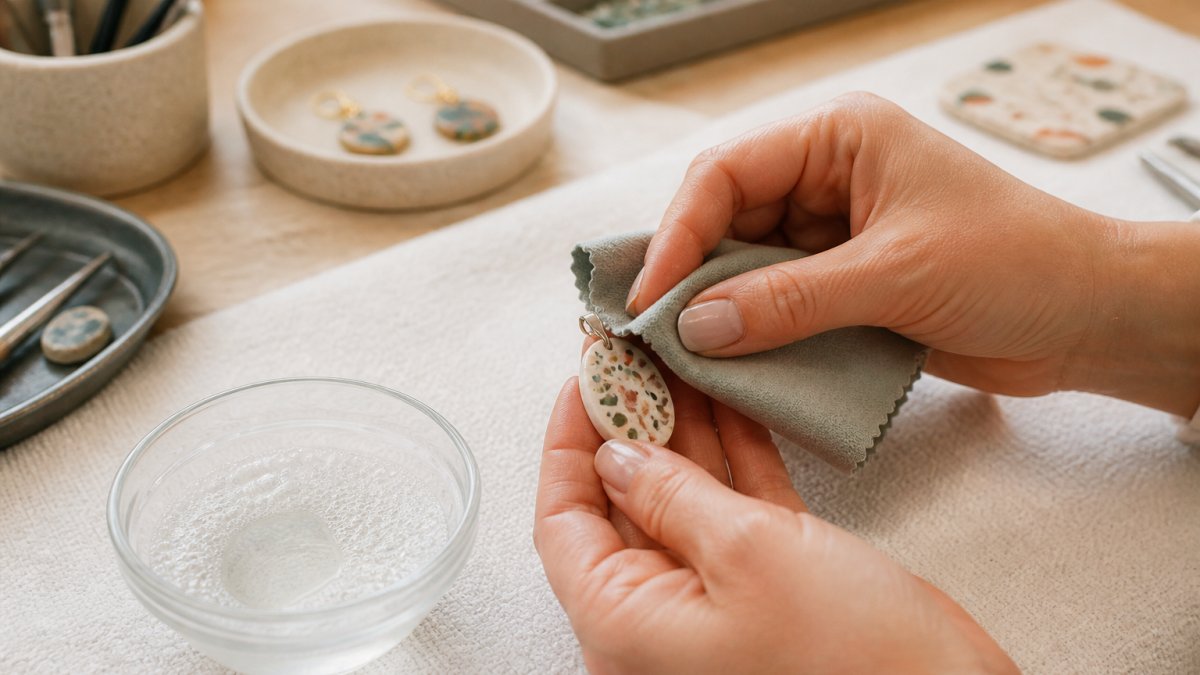
Follow these steps for a safe clean:
- Wipe with a dry microfiber cloth to remove surface oils and dust.
- For stubborn residue, dampen a corner of the cloth with water and one drop of mild soap.
- Wipe the clay and setting gently, avoiding glued joints.
- Dry immediately with a clean, dry section of the cloth.
- Air dry completely before storing.
Skip alcohol, acetone, jewelry cleaners, and ultrasonic machines, they strip resin coatings and can permanently cloud a glossy finish.
What to Do After Your Jewelry Gets Wet
Accidents happen, a splash at the sink, a sudden rainstorm, or forgetting to remove a piece before washing your hands. Here is a practical protocol:
- Blot, don't rub. Use a soft, dry cloth to absorb surface moisture; rubbing pushes water into joints and scratches coatings.
- Inspect the piece. Check glued areas, metal findings, and cord connections for loosening, discoloration, or dullness.
- Air dry completely. Lay it flat on a dry cloth in a well-ventilated area away from heat or sunlight. Do not use a hair dryer, heat can soften cured clay.
- Check for residue. After salt water, chlorine, or soap, a barely damp cloth with plain water removes residue; dry immediately.
- Store only when fully dry. A damp piece in a jewelry box traps moisture against the clay and hardware.
If you notice tarnish on findings or a loose bezel after drying, address it promptly, a jeweler can often re-secure a finding or replace a chain before the problem spreads.
Storage That Prevents Water Damage Before It Starts
Good storage habits extend the life of a clay creation more than any sealant. Keep pieces in a cool, dry place away from direct sunlight, because UV light dulls resin and heat softens cured clay.
A few habits prevent most water damage before it starts:
- Put jewelry on last, after perfume, lotion, and hairspray have dried.
- Take pieces off before showering, swimming, washing dishes, or exercising.
- Keep clay jewelry away from rain and never leave it on a windowsill.
- Store necklaces flat or hanging to avoid stress on the chain and bezel.
- Use a small silica gel packet in the storage container in humid climates.
Handcrafted pieces deserve slightly more attention than mass-produced ones, and the trade-off is worth it: a well-cared-for polymer clay necklace keeps its color and gloss for years, while a neglected one dulls within months.
Everyday Care and Storage for Handcrafted Polymer Clay Pieces
Polymer clay jewelry rewards a little care with years of everyday elegance, and knowing what water can and cannot do to it is the first step. At Gioielli Bijit, every piece is handcrafted from polymer clay and sealed under a protective resin finish. Explore our Handcrafted Olive & Gold Polymer Clay Teardrop Necklace or the Navy & Gold Striped Dangle Earrings to see how the finish looks in person.

Frequently Asked Questions
Can I wear my polymer clay earrings in the shower?
It's best to remove polymer clay jewelry before showering. While baked clay handles brief splashes, prolonged exposure to hot water and steam can weaken the bond between the clay and metal components, dull the resin finish, and cause gradual moisture damage. Water can also get trapped behind bezels or in crevices, leading to loosened posts or discoloration over time. To keep your handmade pieces looking their best, take them off before bathing, swimming, or washing your face.
What is the best way to seal polymer clay jewelry?
A high-gloss UV resin or a dedicated jewelry-grade sealant works well for sealing polymer clay jewelry. UV resin cures to a hard, glass-like finish that resists moisture and adds shine. Apply it in a thin, even layer and cure fully according to the product instructions. Avoid using craft glues or nail polish, which can yellow or peel. Keep in mind that no sealant makes clay fully waterproof; it only adds a water-resistant barrier that extends the piece's life with proper care.
How long will polymer clay jewelry last?
With proper care, polymer clay jewelry can last for years. Baked clay is durable and holds its shape well, but longevity depends on how you treat it. Avoid prolonged water exposure, harsh chemicals, and dropping the piece on hard surfaces. Store it in a cool, dry place away from direct sunlight. Resin-coated pieces are more resistant to moisture and scratching. If a piece does become brittle or the coating peels, it can often be re-sealed or repaired by the maker.
Does water damage baked polymer clay?
Brief contact with water won't ruin baked polymer clay, but prolonged soaking or repeated exposure can cause problems. Water can seep into tiny surface pores, weaken glued connections, and break down the finish over time. The clay itself won't melt, but it may become more brittle or develop a dull, chalky appearance. Metal components like posts and chains are often more vulnerable to rust and discoloration. For everyday wear, simply wipe your jewelry with a dry cloth after any accidental splash.
How do I clean polymer clay jewelry without damaging it?
Wipe polymer clay jewelry gently with a soft, dry microfiber cloth after each wear. For deeper cleaning, dampen the cloth with a small amount of water and mild soap, then wipe the surface and dry immediately. Avoid soaking the piece, scrubbing with abrasive materials, or using alcohol, acetone, or harsh chemicals. Never put polymer clay jewelry in an ultrasonic cleaner. If the piece has a resin coating, a quick wipe is usually all it needs to restore its shine.